It was only a few days ago that I shared a photograph which I took while out in a Surrey town with my family. This picture quickly became the embodiment of the struggle so many people now face in the UK. Seeing people surviving, a word I choose over living in this case, through homelessness is becoming a sadly more usual sight. Not just in big cities but in almost all of the towns I’ve visited over the last year or so.
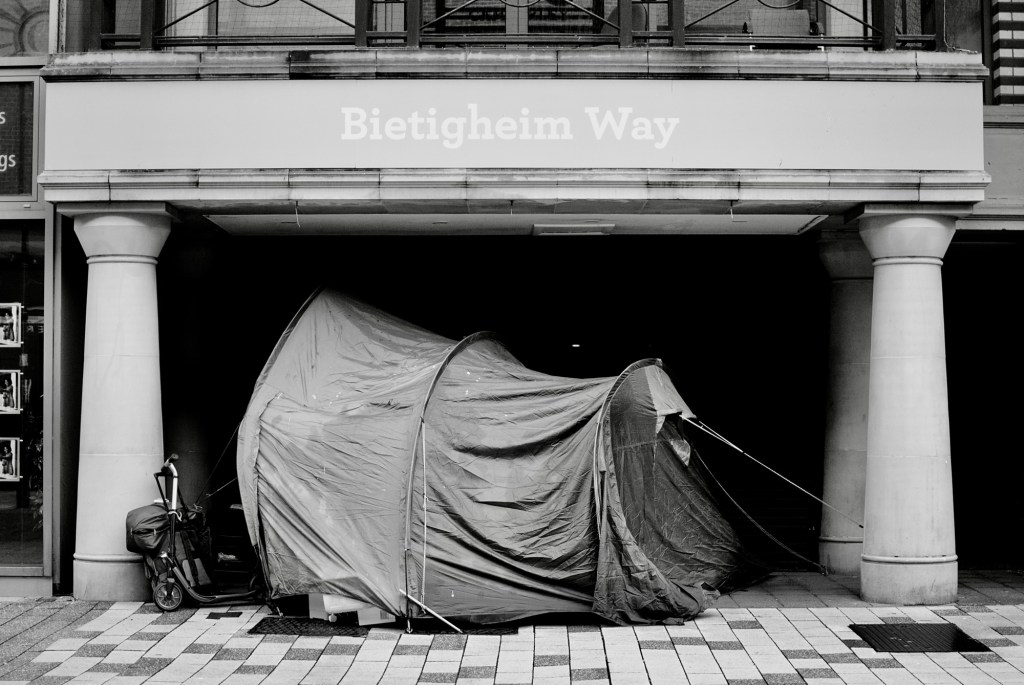
The situation here is beyond saddening. This covered doorway had become home to someone. Not a place to crash for a few hours overnight. A space that was harbouring someone’s life. The bags, boxes, scooter and other collections of their belongings took this from being a place to hide from the rain. It was their full time, everything is here, home.
Today, less than a week after that photo was taken, I just happened to be passing by the same way again. However, something had changed. Where there had been the canvas and poles that formed someone’s place to live, there was now a galvanised steel fence. The life behind it concealed with white plastic sheeting. The makeshift home was now blanked out from public view.
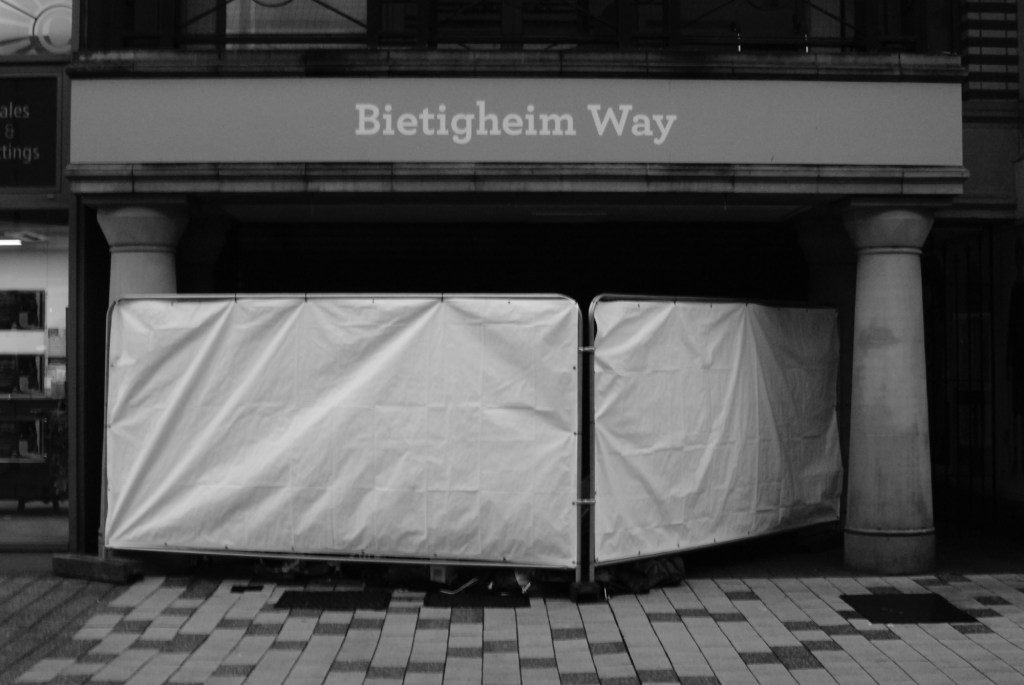
It’s possibly a sign of the times we are living through that, my first thoughts were for the resident of Bietigheim Way. Had they asked to be concealed? Had they been caged in? It certainly wasn’t “they must have been helped.”
This train of thought was interrupted by my curiosity so I timidly made my way to side of the hoarding to ask if anyone was there. I’d put my camera away to approach and ask after the welfare of whoever had been living in this now disguised space. I couldn’t avoid noticing however that, through the gaps in the fence, the tent was now a collapsed bundle of wet fabric and the shopping cart and bags of belongings remained.
I do not know what transpired here. It’s not completely unreasonable to think that the person(s) living there may have been helped into more suitable accommodation. Perhaps the belongings left behind were no longer needed and hadn’t been taken out of choice. What I did know however was that the remains of someone’s utter desperation had now been hidden.
The plastic sheeting trying to white wash the scene of what survival looks like and means for far too many people. A sight obliquely covered up as if to deny the events behind its thin plastic walls ever happened. There was as an air of “we don’t want to see this thank you.” That’s the part which I keep coming back to.
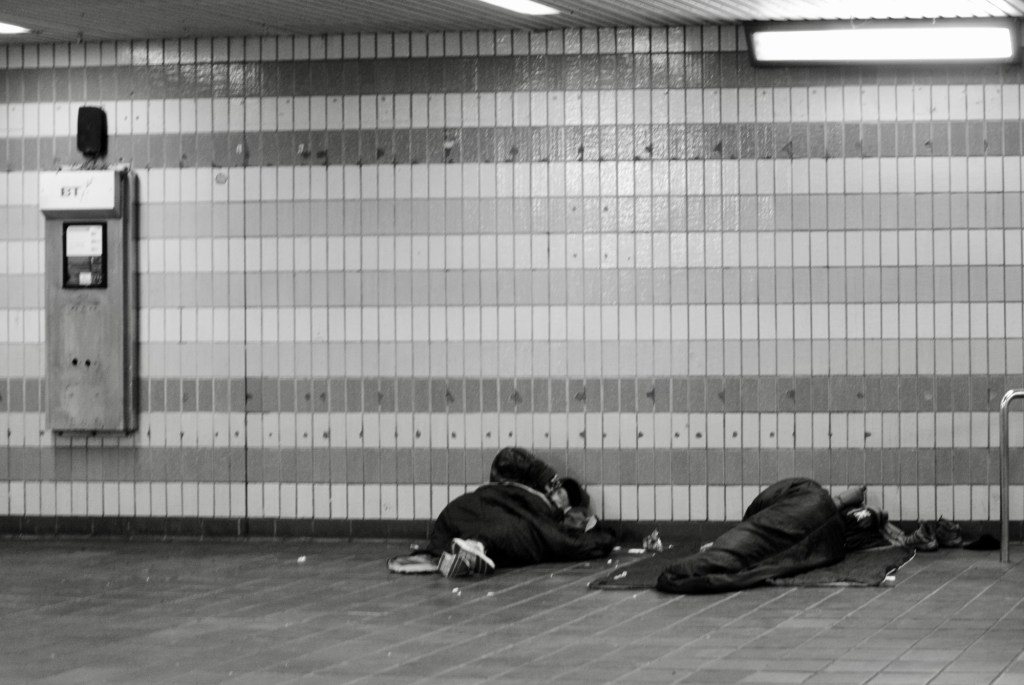
It’s not so much that I’m suddenly noticing there are issues with homelessness but that we are almost encouraged to ignore and dismiss its human impact. I’ve actually had people stop me from talking with homeless people, interrupting to say “don’t give them money it just gets spent on…” and words of that nature. What is really happening when we are actively stopping people from engaging with those who clearly need support?
Health and safety are common justifications within bureaucratic systems but I struggled to believe the fence was really there for anyone’s safety. I very much doubt they could even protest it is there to protect the privacy of those in such situations. It was put there to hide a truth in time and place which the truth can be painful to see.
I never had the chance to speak with the only residents of Bietigheim Way and I cannot tell you for sure what happened there. All I know is that, whatever the full story, the systems of protection had not spared anyone from the experience of living there. They had only taken action to protect the wider public from seeing how bad things are getting.
 What I See
Leave a comment